Overview
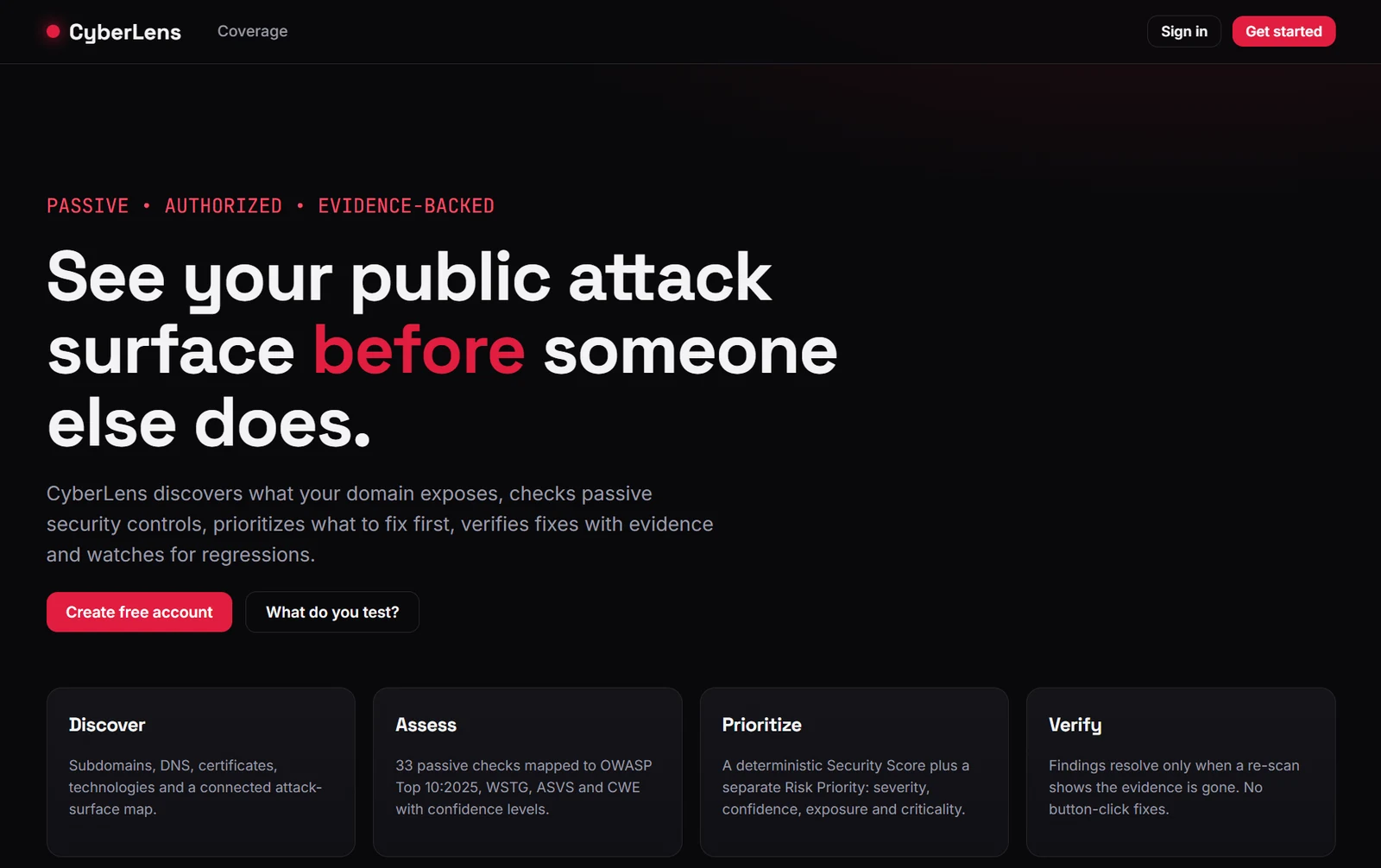
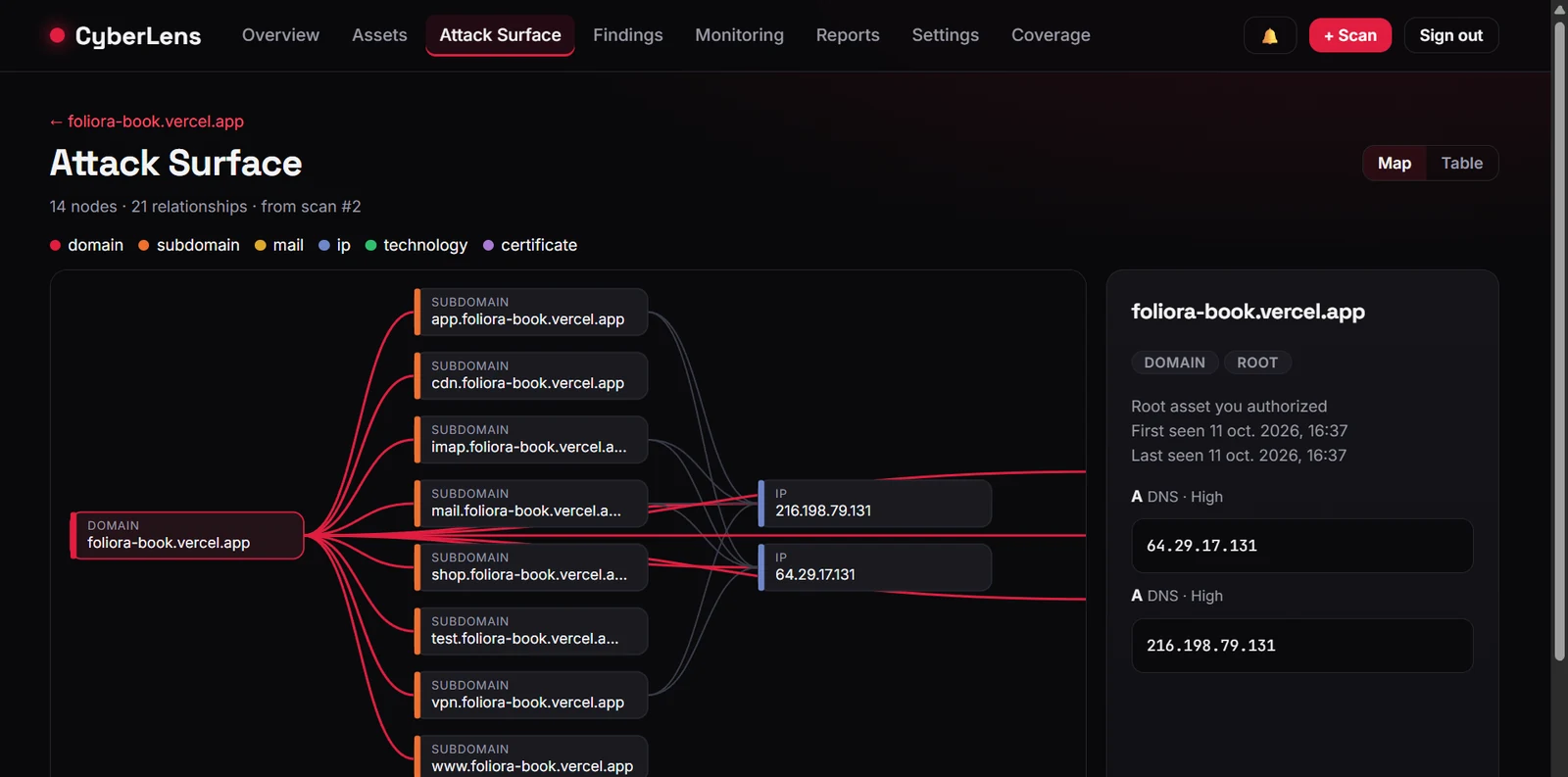
CyberLens discovers what a domain exposes, checks passive security controls, prioritizes what to fix first, verifies fixes with evidence and watches for regressions.
Problem
Security findings are only useful when the person receiving them can understand what happened and what to do next.
Research
The project is shaped around a practical security workflow: test, identify, prioritize and explain.
Design Process
A visual dashboard/reporting layer keeps severity, affected areas and recommendations easy to scan.
Development
A modular monolith on Node.js with no npm dependencies, using the built-in node:sqlite. Every outbound request goes through one validated path with SSRF protection, and accounts use hashed sessions, CSRF protection, login rate limits and TOTP multi-factor authentication.
Challenges
Keeping the scope realistic while still demonstrating meaningful security engineering skills.
Solution
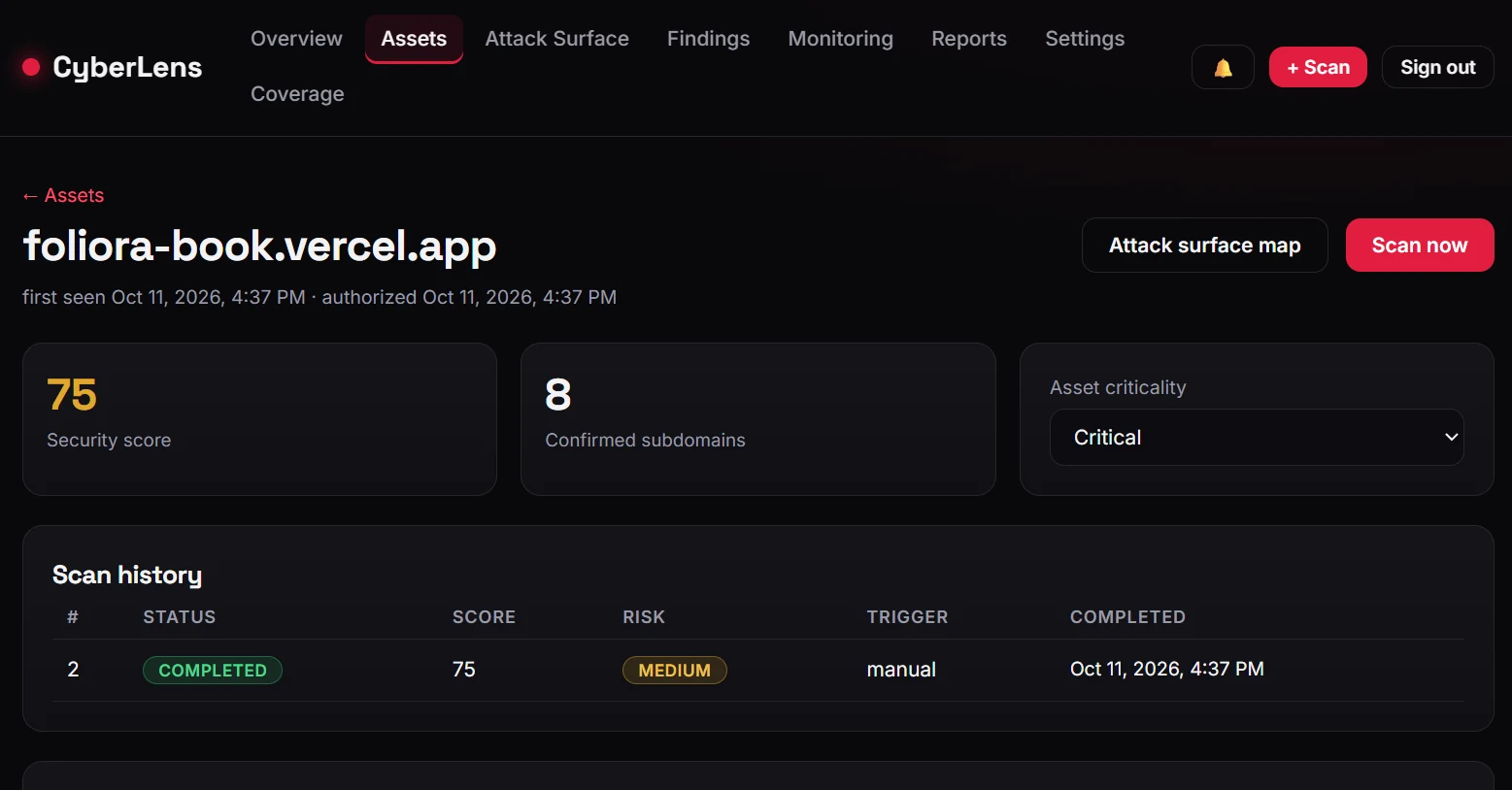
A pipeline of discovery, 33 passive checks, a deterministic Security Score and a separate Risk Priority model. Findings only resolve when a re-scan no longer shows the evidence, and scans can be compared and monitored over time.
Results
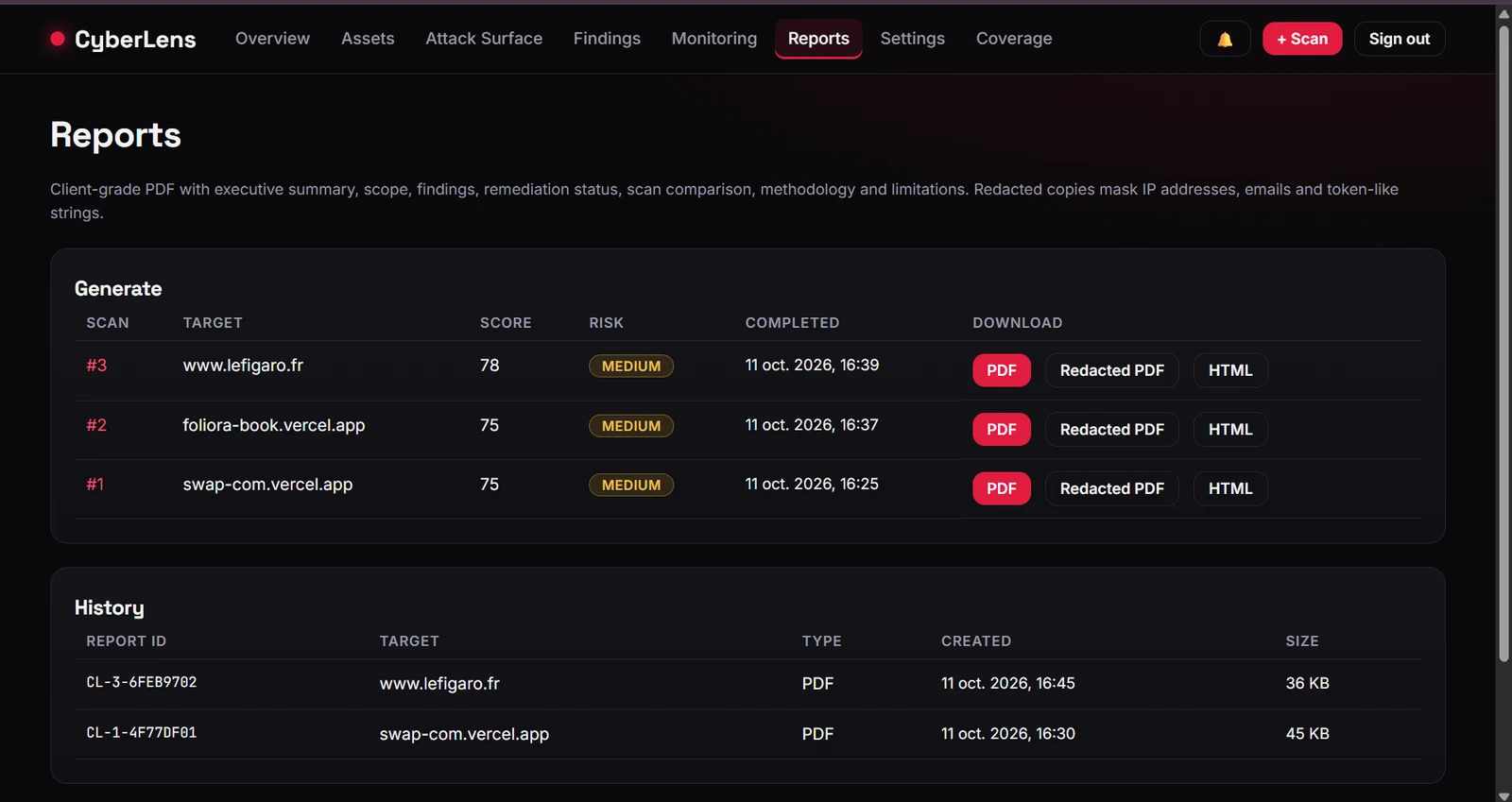
A security engineering project backed by 39 automated tests, including SSRF regression tests, with workspaces, API tokens, scheduled monitoring and redacted PDF reports. It is passive by design and does not test authentication or injection.
Gallery